Episode Transcript
[00:00:02] Speaker A: You are listening to Portobello Talk Radio,
[00:00:05] Speaker B: the authentic voice of Letbrook Grove.
[00:00:08] Speaker A: Hi, my name is Piers Thompson and you're listening to Portobello Radio.
Welcome to our Future Hood, a series about how we can work together to create a greener future for all.
As we've heard in previous programs, saving energy and preserving resources can also help us to save money. So in the process, we'll be helping ourselves as well as our bit of the planet.
This series is part of the Mayor of London's Future Neighbourhoods 2030 program.
Back in 2021, two wards in London were picked out by the Greater London Authority to become model eco neighbourhoods by 2030, ready for a future that is greener, fairer and more climate resilient for all.
One ward was Somers Town in Camden. The other is Nottingdale.
In the first five shows of our Future Hood, we looked at some of the exciting projects that have been happening in Nottingdale. So we thought it was time to talk strategy. What is the thinking behind our Future Hood?
To find out more, I sat down with Max Russell from ARUP Consultants, Batul Zalka from Nottingdale's Future Neighbourhood Team and Kate Rule from the Mayor's Office.
The strategy comes across sometimes as little bit abstract, but there have already been a lot of positive actions that have taken place. We've featured some of them in previous podcasts. We've been to a repair cafe, we've been to upcycling workshops, we've been out in the garden with some of the community gardeners and talking to them about food.
We've been to Nourish Hub, where we've talked about zero waste and how to throw away less food and what we can do. All of which, of course, not only help the environment, but also help your pocket. Because I think in the Zero Waste program, we discovered that on average, every family throws away 83 pounds worth of food every month, which adds up to a grand a year. Nourish also had energy saving workshops where people were taught or not taught, but helped to find ways that in their own homes they could be not spending so much on electricity. And Kate, this is part of a wider initiative at the gla. Could you tell us a little bit about that?
[00:02:37] Speaker C: Future Neighbourhoods is a 7.7 million programme which is funded by the Mayor of London. It intends to empower communities to shape a greener, healthier and more resilient London. So it's really about listening to what types of environmental projects residents want to see in their local area and helping them to fulfil and make those projects happen. And the kinds of projects that are being funded cover five themes.
Those are retrofitting of homes, public buildings, commercial buildings, decarbonised energy systems. That's things like replacing gas boilers and putting in say air source heat pumps.
We also have improving air quality, climate adapted green and resilient neighbourhoods and then zero waste and circular economy.
[00:03:25] Speaker A: Max.
Arup's a big company, isn't it? And you were brought in by rbkc Kensington Chelsea Council to help with this strategy.
What was your role?
[00:03:37] Speaker D: In fact, arup being a global firm, we were able to pull on a lot of the experiences that we've had working with communities and local governments all across the world, often on sustainability challenges and topics.
[00:03:53] Speaker A: So what you did in concert with the people working for the council and also the local residents and local organizations, is that you distilled those five themes from the GLA into five themes that were specific to us here in Nottingdale, is that right?
[00:04:13] Speaker D: Yeah, exactly. So we took those five themes as a starting point.
But obviously, you know, those topics mean different things to different people all throughout London. So one of the key principles that really drove the creation of the strategy was this element of co creation with the community.
So some of the elements, as I mentioned, were new. So one interesting thing that came out from the, from some of the conversations is that a topic about community, there was a real importance or a feeling that community needed to be a prominent and center stage of the vision.
So that theme and that topic we consolidated and coalesced around a theme called Vibrant Spaces and Empowered Communities.
[00:05:03] Speaker A: Patul, how did you find that? How did you find the community responded to your questions?
[00:05:10] Speaker B: The engagement was designed in a way to capture the opinions and the ideas from literally people from the age of 7 to 100. So we even had in the roadshows activities designed for children to draw their ideal future neighborhoods. And they all gave us some really, really nice ideas.
We worked with children in year 6 in Saint Francis of Assisi School to also imagine what the future neighborhoods looks like. And they created some really nice artwork telling us what they actually want to see. So it wasn't just, you know, a survey or a roadshow.
There was more to it. And we were able to capture really the concerns and the aspirations of the people of Nottingdale.
[00:06:05] Speaker A: Sorry, I interrupted you. Actually you were going through the five pillars that we, we've created for Nottingdale.
[00:06:13] Speaker D: So one of the additional pillars is affordable living solutions and energy efficient buildings. So that's really taking a focus on Fuel poverty. And that was highlighted as one of the challenges facing the world.
And how can we utilize some of the energy efficiency improvements that can both support and lower energy bills? You know, obviously over the past few years, we've all been very aware at, you know, increases and changes in energy prices. So how can the energy efficiency improvements support the lowering of bills but also contribute to a reduction in greenhouse gas emissions as well? So to try and really emphasize this co benefit as well, another pillar is called, or how we framed it is clean air, active and healthy streets. So that's really looking at improving the quality and the accessibility of a lot of spaces across Nottingdale, the connective areas across Nottingdale.
Now, of course, there are some major roads that border Nottingdale as well, and air quality was one of these key topics that kept coming back. And again, so this pillar of the strategy really aims to put a focus on how can we improve air quality to safe levels, but also how to improve the accessibility, the walkability, the cyclability and the connectivity of Nottingdale so that it can be a pleasant place to get all the daily needs that people have.
The next one was also framed around increasing the green and climate resilient environment of Nottingdale.
So this was about making sure that green spaces and greenery could flourish around the ward around Nottingdale, boosting biodiversity, so making sure that it's a home for nature.
And what was really quite nice and interesting through the conversations that we had again with residents in the steering group was how to bring nature into the streets. So not just increasing the biodiversity and the quality of green spaces in parks, but how can we bring some of that nature into our streets? You know, having, you know, bringing nature to people as opposed to making people go to nature, which I think was a fantastic reframing of some of the actions within this pillar.
And then finally to round it off, the fifth pillar is titled and framed around sustainable practices driving a thriving economy.
So this is really bringing together a lot of the jobs and skills that are needed to help to, for example, renovate our buildings. But also looking at a more circular economy, how do we share and reuse some of the items that we already have, which is more environmentally beneficial in itself. And also how to work with youth and provide opportunities for youth, as you mentioned before, as well, how to showcase that the green transition can be a really thriving transition and a really prosperous transition with a lot of opportunities across all works of life as well.
[00:09:41] Speaker A: Patul, tell us you've been working not only with residents in framing this strategy, but also in community organisations in bringing them to fruition.
[00:09:53] Speaker B: Yes, Max mentioned the steering group which played a very important role in shaping this strategy because we had an extensive engagement with all sorts of people in Nottingdale. We spoke, I said, with people from 7 years old to 100 years old. But then how do we make sure that everything they said is taken on board?
That was through the steering group. So we had a group of counselors, chairs of residence, associations, people who worked in local organizations, a very active group, which I really want to extend a big, big thank you to them because they helped us make sure they kept us accountable to the people we consulted with.
We consulted a large group of stakeholders, people who give us more technical, in depth input, and they advised us on how we take on some of the actions because the pillars were the big umbrella that we wanted to work under. But then what exactly this means and how do we translate this into an action?
We needed help from stakeholders such as yourself and other organizations we're working with, such as a Space, Energy Garden, Brown Baby. A lot of really great, great organizations helped us shape this strategy. So I think I want to ask you that question.
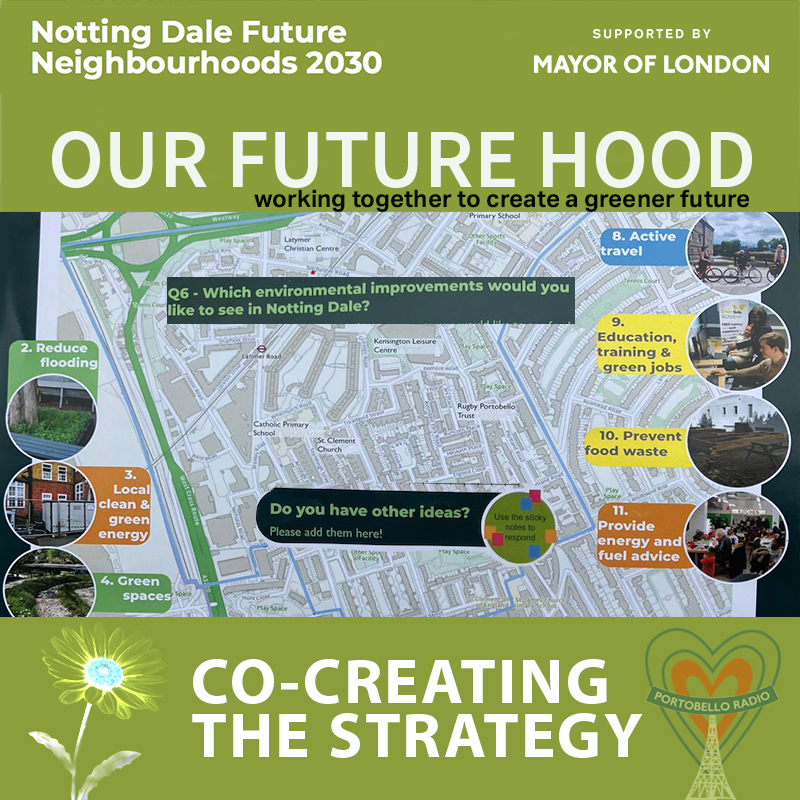
[00:11:27] Speaker A: Well, I mean, Portobello Radio were involved as partners in phase two and phase three making podcasts to highlight some of the good things that have happened. But I've also been involved as a committee member of Silchester Residents association and was, I remember being at the Harrow Club and it was quite a long meeting, maybe an hour and a half, two hours. But we broke out into little groups, other people who knew the neighborhood, we chatted amongst each other. There was a big map on the wall and you had post it notes and you said, we think this should happen here or we think that should happen there.
And indeed, my daughter went on one of the North Kensington Community Energy training courses for which she got paid. She got to go on the roof of the Westway, Westway Sports center.
And it was very good for her, not only in terms of she actually isn't going to probably go into community energy, but in terms of building her skills, building her teamwork abilities. So, you know, just as someone who lives around the corner, I, I was, I've done. It's touched me this strategy in two or three different ways already.
Kate. It's very important, of course, that residents are intimately involved in creating these strategies.
[00:12:55] Speaker C: A really important perspective of the program and art that's really key to our approach is that understanding that each neighbourhood is unique, they are geographically unique, they have their own histories and they have their own characteristics and so therefore it's really important to get the perspective of residents and really the support of residents in terms of the types of projects that they want to see happen in their area.
And it's great to hear about the work that the team here in Nottingdale so council and obviously with their ARUP partners have done to really listen to the perspectives of residents.
It's obviously then for the team to basically work with local partners, local businesses, charities to bring those projects to fruition so that residents can see that their views were listened to and that the types of projects that then occur in the ward are the types of things that they ask for.
And it's really exciting to see so much activity that's going on in Nottingdale right now.
[00:14:03] Speaker A: We're coming to towards the end of this project and the strategy that has been developed now, it's. It's a snapshot in time. It's something that's going to be constantly evolving in order to leave a lasting legacy.
[00:14:17] Speaker D: Yeah, absolutely, absolutely. And as we were going through the pillars of the vision, it's, you know, it's not to reinvent the wheel or create something new. A lot of this through phases one and phases two, a lot of these actions and activities have already been happening as well. So this strategy was a moment in time to engage the community, making sure that we're all clear on where we want to go, what's important, what things do we maybe want to not prioritize as much, where do we want to lean into a bit more? Creating that vision, which can serve as a framing currently of a shared understanding of these principles, of these pillars of that vision. But it's also important to note, you know, the pillars can be changed and it's important to ensure that this continued engagement with communities and ultimately, you know, as you know, ARUP and my involvement in the project will obviously, you know, reduce over time, but it's making sure that it's handed over to the community and it should be their strategy, their vision that they want to nurture. If they want to change it, it can change and it can evolve as the conditions in notting down and as the real of Nottingdale changes as well.
[00:15:36] Speaker A: A good example of that, I suppose, is retrofitting, which is a key part of the affordable living solutions and energy efficient buildings. Because we hope that one day there'll come a moment when everything has been retrofitted and we are energy efficient.
[00:15:54] Speaker B: One of the most important actions that we put in this strategy, because our ambition and it's a big ambition we hope we achieve that, is to really retrofit all social housing by 2030 in Nottingdale. So the strategy will serve as, you know, we're putting this goal in front of our eyes.
It's formal now. We're working towards it and we'll try to push all resources possible in order to achieve it.
[00:16:26] Speaker A: And people in Henry Dickens, for instance, will already have seen a lot of work being done. Correct windows.
[00:16:33] Speaker B: Yeah, yeah. And in. In this year, the people in. In Silchester Estate, they will also see how we're. We're also contributing to the big retrofitting project there.
Also, Max was. Was saying that we are. This is kind of this moment in time. The strategy is a moment in time. And we have done a lot of work in Nottingdale that kind of taught us we are learning as we go what actually works, what doesn't work, where the imagination of the residents is. So, for example, we have a project like the Library of Things, which is receiving a lot of interest from the residents. We had cycling trainings. We learned as we go what really the residents want and what they. They prefer to see more of.
For example, so far we have delivered five community kitchen gardens in Nottingdale, which are very popular.
We're bringing to. We're trying to bring these pockets of greenery into Nottingdale, such as the Energy Garden project, which is in Latimer Roadside Station, whenever possible. We know Nottingdale lacks, you know, lacks spaces for greenery, so we're trying to bring pockets of greenery here and there.
And then this strategy will help us kind of organize our thinking and put a roadmap that we, by 2030, we want to achieve all these good things.
[00:18:13] Speaker A: What I quite like is that some of the. The actions cover more than one purpose. I mean, I was here at Lancaster west the other day when the Tree Council were planting a golden orchard.
And that orchard not only helps with the greening of the neighborhood, but also the roots going into the soil create something that holds some of the water. So it also addresses some.
Mitigates to some extent, some of the flooding issues.
Max, that's quite an important thing, isn't it, to find activations that actually can cover more than one base?
[00:18:55] Speaker D: Yeah, absolutely. And unfortunately, it's not a difficult thing to do. Often a lot of these actions that have been suggested by the community and also are thriving around the world do and are able to provide these multiple benefits as well.
So as we were going through, shaping these actions and developing these actions that was one of the key considerations that we paid about, which ones were being prioritized about, you know, which ones can have multiple benefits or these co benefits. Which ones can reduce energy bills, for example, as well as reducing greenhouse gas emissions?
There are a few really nice ones.
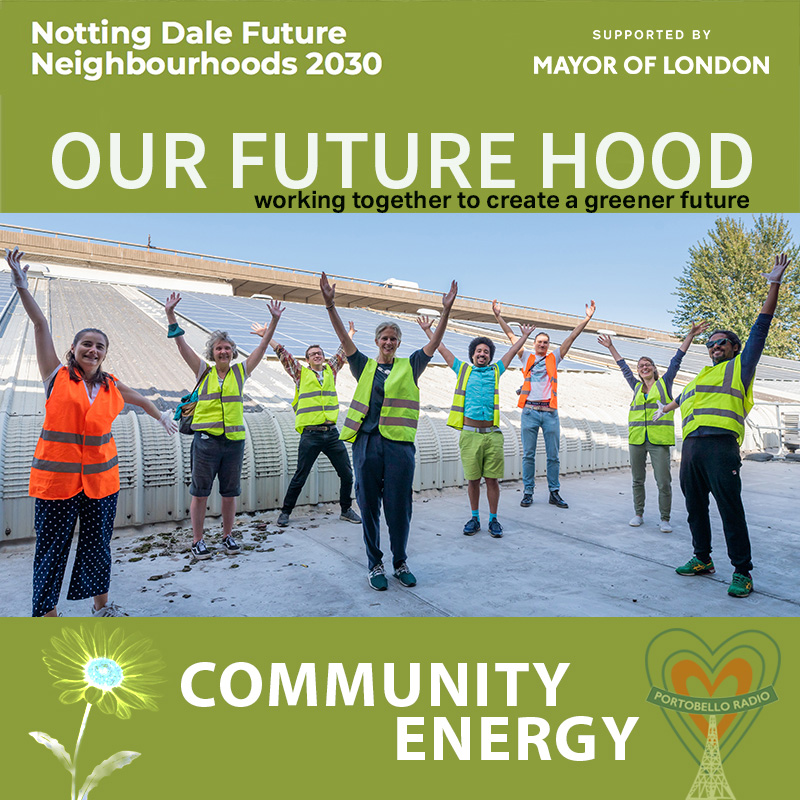
You know, one of the actions that have been proposed is increasing the community energy schemes. So using renewable energy and having a community network that is able to benefit from that renewable energy that is being generated within Nottingdale. So for example, through solar panels, but making sure that the benefit of the energy actually is paid to the community and not siphoned away to other areas as well. So you have the environmental benefits, reducing our dependency on fossil fuels which contribute to greenhouse gas emissions and climate change, but also the economic benefit that this could actually benefit a lot of people within Nottingdale as well.
[00:20:25] Speaker A: These are all grand ambitions. But I was keen to find out what benefits the people of Nottingdale had gained through the Future Neighbourhoods project.
So I went to talk to Marwin Al Naji, who's a ward councillor and local resident.
[00:20:38] Speaker E: The Future Neighbourhood contributed in such a way that, for example, on the energy front we are aiming to better insulation of homes, healthier homes. Through a different research, the team at W11, they are really working hard for the renewable energy regarding solar, empowering local companies in order to provide cheaper energy for the residents.
So it's a trade off between what we are aspiring to achieve in terms of saving the climate as well as saving on our income.
So circular economy in general is well underway at the moment in a different form and shapes where the target is to minimize the impact on the climate and the same time to save money.
[00:21:46] Speaker A: What was your experience of the co design that went into creating a bespoke strategy for Nottingdale?
[00:21:57] Speaker E: The workshop was series of workshops with well organized curriculum with different topics to be addressed. It was well managed to capture all the thoughts, all the discussion in order to develop that strategy. Every avenue I felt it was followed in an honest and transparent way for residents to voice their opinion and mark that through a very transparent process.
Working together will achieve the best for our community.
[00:22:37] Speaker A: It does seem that the Nottingdale Future Neighbourhood really might come into focus by 2030.
But what are the next steps? What's happening now and how can people get involved?
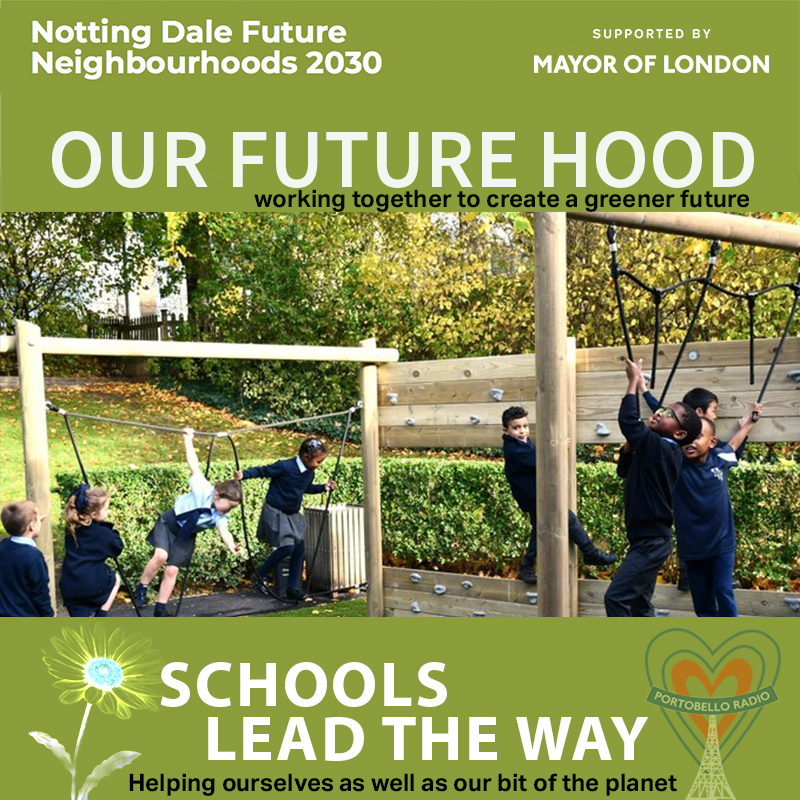
[00:22:49] Speaker B: Some of these projects we are working with children, for example, to redesign their playground. In the Futurehood Club we're working with the group of artists. So there's a lot going on, a lot that will go on that the residents can participate in and this is kind of the core activities that will build the legacy for the, let's say, coming five years, because we focused on in this year on activities that empower the youth, empower communities to be able to take on this strategy.
So we're training youth, for example, you, Pierce will train some people to they
[00:23:30] Speaker A: themselves then to be making podcasts themselves.
[00:23:34] Speaker B: Correct, Correct. So we're also training children to do community engagement, community consultation with the Futurehood Club in Henry Dickens Community Center. So this element of kind of giving the power to the community then to take on the work, this is our short term focus.
[00:23:57] Speaker A: Well, one of the things I particularly like actually is things like the gardening club. Because the gardening clubs were an early part of the strategy.
It built on something that was already happening here, particularly since the fire and some of the kind of guerrilla gardening initiatives.
But already there are people who've come through volunteering in the gardening clubs and are now in some paid employment for gardening companies. So that really ticks a lot of boxes out of the strategy.
[00:24:31] Speaker B: The next bullet point in terms of legacy is really to get the council to adopt this strategy as part of their day to day work.
Because part of it is, yes, the community and the community should lead and own this strategy, but also the council can provide support, funding and they can guide these local organizations as to where to bring this funding from.
So that's also one thing we're focusing on this year and then kind of disseminating these lessons to other London boroughs, speaking with other boroughs that want to replicate this model, that probably Kate is better placed to talk about this than I am.
[00:25:16] Speaker C: Obviously the program is invested in the two exemplar future neighbourhoods, Nottingdale being one of them and Somerstown being the other. And the intention was always to put those neighbourhoods on a path to understanding the kind of environmental changes that they could make to reach net zero by 2030.
So hopefully the journey continues.
And obviously Batula is talking about how the goal is really for those projects to start to be owned by communities and for them to drive those forward.
And our intention with future neighbourhoods is also really to understand the lessons that have been learned through all of the projects that have been delivered both in Nottingdale and Somerstown and start to work with other boroughs who are interested in becoming a future neighbourhood so that they can understand how they could look to replicate the model.
And that's something that we're working on at this time.
[00:26:11] Speaker D: From our perspective, we've been privileged and fortunate enough to be able to help in this journey, help Nottingdale, listen to the people of Nottingdale and help to process some of these priorities, some of the challenges, the actions, the pillars of the vision, and put this in a document, this strategy. Yeah. It's over to the community now to really take this run with it, make it their own.
[00:26:39] Speaker A: Thank you, Max. Thank you, Kate. Thank you, Patul.
[00:26:42] Speaker C: Thank you, thank you, thank you.
[00:26:45] Speaker A: Thanks for listening. I hope that we've given you a better understanding of what Future Neighbourhoods is about and why it's so important.
My name is Piers Thompson. This is Portobello Radio, your local community radio station. And this series has been supported by the Mayor of London.
Let's leave the last words to Batool from Nottingdale. Future Neighbourhoods.
[00:27:05] Speaker B: I am really excited to see how this strategy will evolve because it is a living strategy.
There's time and there's room to improve it as we go and to revisit it every year. So if anyone who's listening, any resident, has ideas, they want to contribute, tell us what we should be doing and they want to even talk about the strategy, they're welcome to call us, email us, which they, I think, Pierce, you will have our contact details there.
And also, if they want to be involved in the projects that we mentioned, they're also welcome to contact us. And thank you so much.